
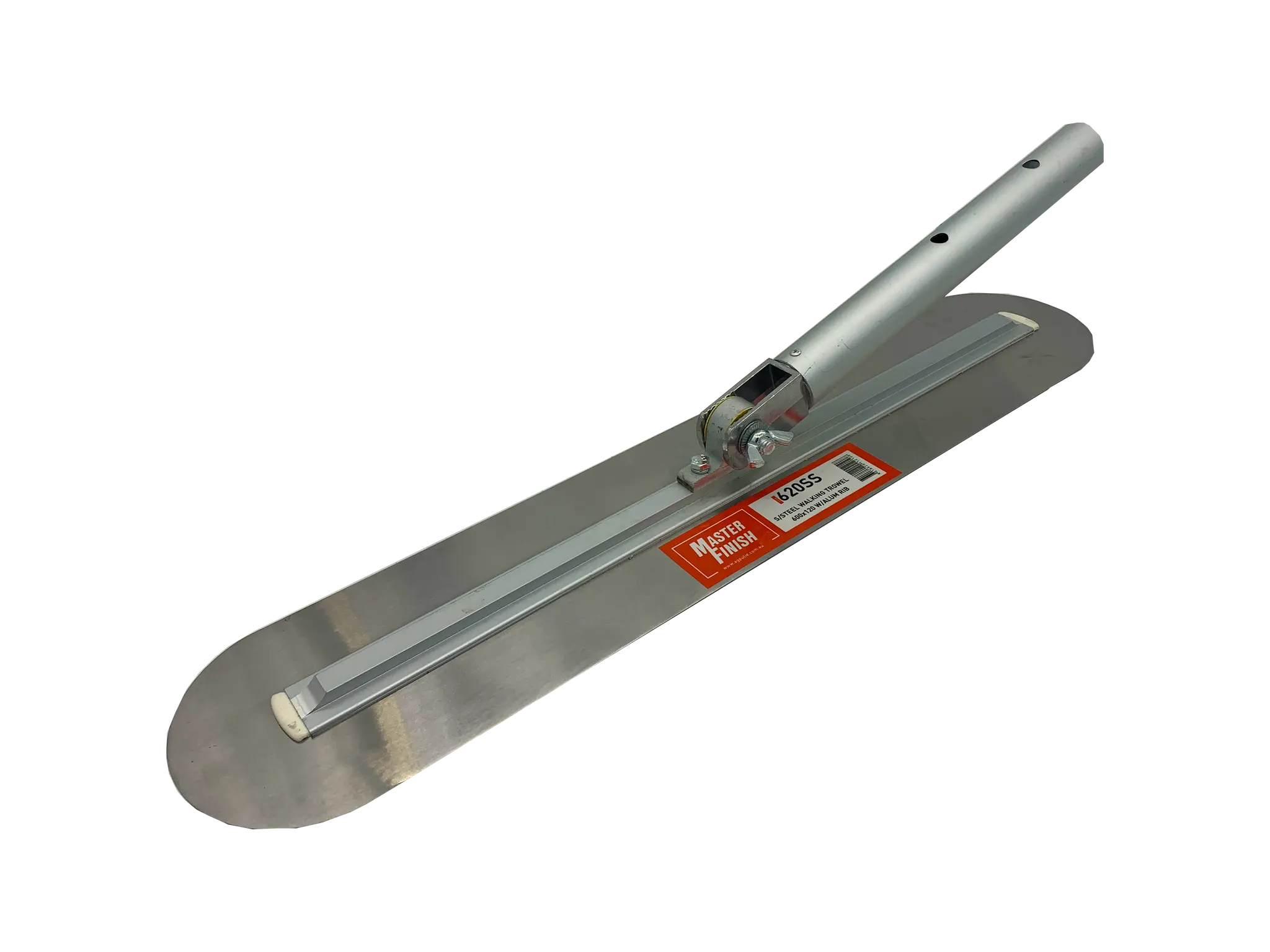
A walking trowel, more commonly known as a walk-behind power trowel, is a construction tool used to smooth, level, and finish freshly poured concrete surfaces. It plays a critical role in achieving a dense, durable, and visually appealing concrete finish. Contractors and concrete professionals rely on walking trowels for floors in warehouses, garages, factories, commercial buildings, and residential slabs. Understanding what a walking trowel is used for helps ensure proper concrete finishing and long-term surface performance.
Understanding a Walking Trowel
A walking trowel is a motorized concrete finishing machine equipped with rotating blades mounted beneath a protective cage. The operator walks behind the machine, guiding it across the surface while the blades spin at adjustable speeds. The rotating blades apply pressure to the concrete surface, smoothing imperfections and compacting the top layer.
Walking trowels are typically powered by gasoline or electric engines and are available in various blade diameters to accommodate different project sizes.
Primary Uses of a Walking Trowel
The main purpose of a walking trowel is concrete finishing. After concrete is poured and initially leveled with screeds and bull floats, the surface begins to set. At this stage, a walking trowel is used to refine the finish.
Key uses include:
-
Smoothing rough surfaces: Eliminates minor ridges and tool marks.
-
Leveling uneven areas: Ensures consistent surface flatness.
-
Compacting the surface: Increases density and durability.
-
Producing a polished finish: Creates a smooth, professional appearance.
By properly finishing the surface, contractors improve both the structural integrity and aesthetics of the concrete slab.
Types of Finishing with a Walking Trowel
Walking trowels can achieve different levels of finish depending on blade angle and timing. During the early stage of finishing, operators use float blades to level and smooth the surface. As the concrete continues to cure, finishing blades are used with increased blade pitch to apply greater pressure and create a harder, smoother surface.
This staged process helps reduce surface defects such as scaling, dusting, or uneven textures.
Benefits of Using a Walking Trowel
One of the major advantages of a walking trowel is efficiency. It significantly reduces manual labor compared to hand troweling, especially on large concrete slabs. The machine covers more surface area quickly while maintaining consistent quality.
Another benefit is improved durability. Proper troweling compresses the top layer of concrete, increasing resistance to wear and abrasion. This is especially important for high-traffic areas such as industrial floors and parking structures.
Walking trowels also enhance appearance. A well-troweled slab has a smooth, professional finish that improves overall project quality.
Walking Trowel vs. Ride-On Trowel
For smaller to medium-sized projects, a walking trowel is often sufficient. Larger commercial or industrial projects may use ride-on power trowels, which allow operators to sit on the machine for greater coverage and productivity.
Walking trowels are generally more affordable and easier to transport, making them ideal for residential and mid-scale commercial applications.
When Should a Walking Trowel Be Used?
Timing is critical when using a walking trowel. If used too early, the surface may be too soft and prone to damage. If used too late, the concrete may be too hard to properly finish. Experienced operators monitor the setting process carefully to determine the ideal time for troweling.
Conclusion
So, what is a walking trowel used for? It is a vital tool in concrete construction, designed to smooth, compact, and finish freshly poured slabs. By improving surface flatness, durability, and appearance, a walking trowel ensures high-quality results in both residential and commercial projects. Whether used for garage floors, warehouses, or large industrial spaces, the walking trowel remains an essential piece of equipment for professional concrete finishing.
Post time: Feb-12-2026