
An adhesive trowel is a specialized hand tool used to apply and spread adhesives evenly across surfaces before installing materials such as tiles, flooring, wall panels, or insulation boards. It is an essential tool in construction, renovation, and DIY projects where strong bonding and uniform adhesive coverage are required. Understanding what an adhesive trowel is and how it works can help ensure better installation quality and long-lasting results.
What Does an Adhesive Trowel Do?
The primary function of an adhesive trowel is to distribute adhesive material—such as tile adhesive, thin-set mortar, or construction glue—across a surface in a controlled and consistent manner. Unlike a flat trowel, an adhesive trowel typically features notches along one or more edges. These notches create evenly spaced ridges in the adhesive, allowing air to escape and ensuring proper contact between the adhesive and the material being installed.
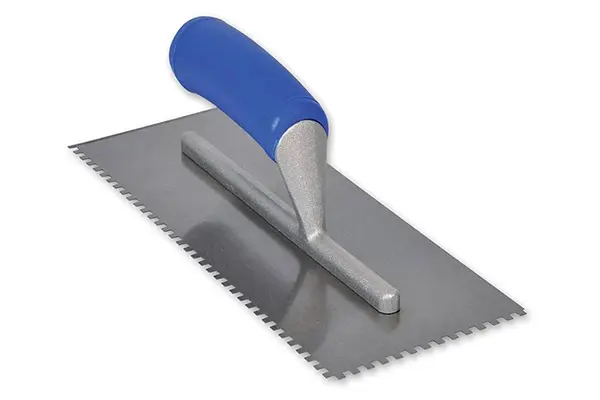
This ridged pattern helps achieve optimal bonding strength while preventing excess adhesive from building up under tiles or panels.
Types of Adhesive Trowels
Adhesive trowels come in various shapes and notch styles, each designed for specific applications:
-
Square-notched trowels: Commonly used for ceramic and porcelain tiles, offering strong adhesive coverage.
-
U-notched trowels: Ideal for softer adhesives and vinyl flooring installations.
-
V-notched trowels: Often used for thin adhesives and lightweight wall tiles.
-
Flat-edge trowels: Used for spreading or smoothing adhesive without creating ridges.
Choosing the correct notch type and size is critical for achieving the right adhesive thickness and bond strength.
Common Applications of Adhesive Trowels
Adhesive trowels are widely used in both residential and commercial projects. Common applications include tile installation, laminate and vinyl flooring, wall cladding, stone veneer installation, and insulation board fixing. They are also used in specialized tasks such as carpet tile installation and waterproof membrane application.
In tile work, an adhesive trowel ensures even coverage beneath each tile, reducing the risk of hollow spots that can lead to cracking or loosening over time.
Key Features of a Good Adhesive Trowel
A high-quality adhesive trowel typically includes a durable metal blade, precision-cut notches, and a comfortable handle. Stainless steel blades are preferred for their corrosion resistance and smooth finish, while carbon steel blades offer rigidity for heavier adhesives.
An ergonomic handle improves control and reduces hand fatigue, especially during extended use. The balance between blade flexibility and stiffness is also important for consistent adhesive application.
How to Choose the Right Adhesive Trowel
Selecting the right adhesive trowel depends on several factors, including the size and type of material being installed, the adhesive used, and the substrate condition. Larger tiles generally require larger notches to ensure adequate adhesive coverage, while smaller tiles and thin materials work best with finer notches.
Manufacturers often recommend specific trowel sizes for their adhesives, so checking product guidelines can help achieve optimal results.
Proper Use and Maintenance
Using an adhesive trowel correctly involves holding it at a consistent angle, usually around 45 degrees, to create uniform ridges. After use, the trowel should be cleaned immediately to prevent adhesive from hardening on the blade. Proper cleaning and storage extend the tool’s lifespan and maintain performance.
Conclusion
An adhesive trowel is a vital tool for achieving strong, durable bonds in construction and installation projects. By spreading adhesive evenly and creating uniform ridges, it ensures proper material contact and long-term performance. Choosing the right adhesive trowel for your application improves efficiency, reduces errors, and helps deliver professional-quality results in both DIY and professional settings.
Post time: Jan-23-2026