
Putty knives are essential tools in painting, drywall, and general repair work. They are commonly used for applying, smoothing, and scraping materials such as putty, spackle, joint compound, and caulk. One of the most common questions for both DIY users and professionals is what is the difference between straight and angled putty knives. Understanding how these two types differ can help you choose the right tool and achieve better results.
What Is a Straight Putty Knife?
A straight putty knife has a flat blade that extends directly from the handle in a straight line. This simple design makes it one of the most versatile and widely used putty knives. Straight putty knives are available in a range of blade widths, typically from 1 inch to 6 inches or more, allowing users to handle both small touch-ups and larger surface areas.
Because the blade is flat, straight putty knives are ideal for spreading filler evenly across flat surfaces. They are also commonly used for scraping old paint, removing wallpaper residue, and cleaning surfaces before refinishing.
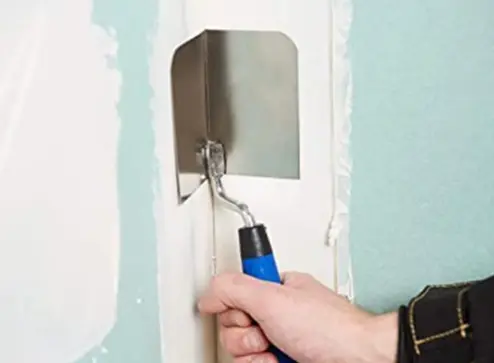
What Is an Angled Putty Knife?
An angled putty knife features a blade that is bent or offset from the handle, usually at a slight angle. This design allows the user to keep their hand away from the surface being worked on, providing better clearance and control in tight or awkward spaces.
Angled putty knives are especially useful for detailed work, such as filling corners, applying compound near edges, or working in areas where a straight blade might cause the handle to hit the surface. They are commonly used in drywall finishing, trim work, and precise repair tasks.
Key Differences Between Straight and Angled Putty Knives
The most noticeable difference between straight and angled putty knives is blade orientation. Straight putty knives offer direct contact with the surface, making them ideal for smooth, even application. Angled putty knives, on the other hand, provide improved ergonomics and access in confined areas.
Another difference is control and visibility. Straight blades give a clear view of the working edge, which is helpful for beginners and broad surface work. Angled blades offer better leverage and wrist comfort when working near ceilings, corners, or recessed areas.
In terms of application, straight putty knives excel at general-purpose tasks like spreading, smoothing, and scraping on flat surfaces. Angled putty knives are better suited for finishing edges, corners, and areas that require precision.
Which Putty Knife Is Better for Scraping?
For heavy scraping tasks, straight putty knives are generally preferred. Their flat blade allows for consistent pressure across the surface, making it easier to remove paint, adhesives, or old filler. Many straight putty knives also have reinforced blades for added durability during scraping.
Angled putty knives can still be used for light scraping, but they are not typically designed for aggressive removal tasks.
Which Putty Knife Is Better for Applying Filler?
Both types can be used to apply filler, but the choice depends on the location and size of the repair. Straight putty knives are best for wide, open areas where smooth coverage is needed. Angled putty knives are ideal for small repairs, corners, and areas around fixtures or trim.
Choosing the Right Putty Knife
When deciding between a straight and angled putty knife, consider the type of project you are working on. Many professionals keep both types in their toolkits to handle different tasks efficiently. Blade material, flexibility, and handle comfort are also important factors to consider.
Conclusion
So, what is the difference between straight and angled putty knives? Straight putty knives offer versatility and ease of use for flat surfaces and general tasks, while angled putty knives provide better access, comfort, and precision in tight spaces. Understanding these differences helps you select the right tool for each job, leading to better results and a smoother, more professional finish.
Post time: Feb-07-2026