
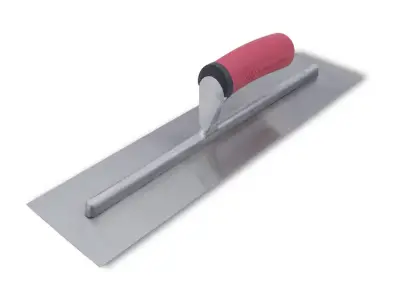
Choosing the right plastering trowel is more than just a matter of picking a tool off the shelf; it is the difference between a smooth, mirror-like finish and a frustrating day of “fatigued” wrists and uneven walls. If you are wondering, “what size trowel is best for plastering?” the answer typically depends on your experience level and the specific stage of the project.
In this guide, we break down the most common plastering trowel sizes and help you determine which one belongs in your toolkit.
The Short Answer: The All-Rounder
For the vast majority of tasks, a 14-inch (355mm) trowel is considered the “gold standard.” It strikes the perfect balance between coverage and control. It is large enough to spread a significant amount of plaster quickly but light enough to prevent joint strain during long shifts.
Trowel Sizes and Their Best Uses
Plastering trowels generally range from 8 inches to 20 inches. Here is how they compare:
1. The 11-inch to 12-inch Trowel (Beginners & Detail Work)
If you are new to the trade or a DIYer, start here. Smaller trowels offer maximum control.
-
Best for: Intricate areas, window reveals, and small repair patches.
-
Why choose it: It requires less physical strength to maneuver and makes it easier to keep the blade flat against the wall.
2. The 13-inch to 14-inch Trowel (The Professional Choice)
This is the most popular range for professional plasterers. A 14-inch trowel allows you to apply a “first coat” efficiently while maintaining enough precision for the “second coat.”
-
Best for: Standard residential walls and ceilings.
-
Why choose it: It offers the “sweet spot” of productivity without being unwieldy.
3. The 16-inch to 18-inch Trowel (Speed & Large Surfaces)
Larger blades are designed for “flattening” and “laying on” over massive surface areas.
-
Best for: Large commercial walls and expansive ceilings.
-
Why choose it: It reduces the number of passes needed, which helps minimize “track marks” or ridges in the wet plaster.
Factors to Consider Beyond Size
While length is the primary measurement, two other factors will influence your finish:
Blade Material: Stainless vs. Carbon Steel
-
Stainless Steel: The preferred choice for beginners and those who don’t plaster every day. It is rust-resistant and easier to maintain.
-
Carbon Steel: Often favored by “old-school” pros. It requires more care (must be oiled to prevent rust), but the blade wears down to a razor-sharp edge that provides an unbeatable polished finish.
Flexibility and “Pre-Worn” Edges
Modern flexi-trowels (usually 0.4mm to 0.6mm thick) are game-changers for the final finishing stages. They require less pressure to achieve a smooth surface. Additionally, look for “broken-in” or “pre-worn” trowels; these have slightly radiused corners that prevent the tool from “digging in” and leaving lines on your first day of use.
Summary Table: Which Size Do You Need?
| Skill Level | Recommended Size | Primary Task |
| DIY / Beginner | 11″ – 12″ | Small rooms, patches, and learning technique. |
| Professional | 14″ | General-purpose skimming and rendering. |
| Expert | 16″ – 18″ | Large commercial ceilings and speed-work. |
Final Verdict
If you can only buy one, go with a 14-inch stainless steel trowel. It is versatile enough to handle a small bathroom or a large living room. As your confidence grows, you can add a 10-inch detail trowel for corners and a 16-inch flexible finishing trowel to take your surfaces to the next level.
Post time: Dec-18-2025